From Airy's Equation to the Non-Dissipative Lorenz Model: Turning Points, Quantum Tunneling, and Solitary Waves
Original article: https://doi.org/10.3390/encyclopedia5040208
Summary
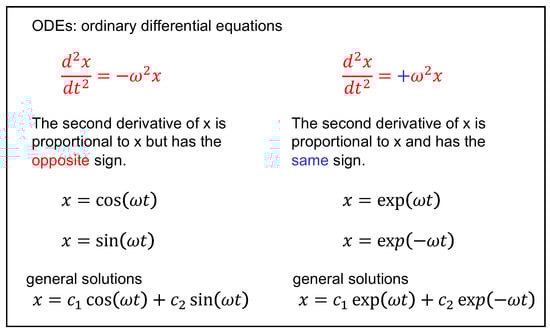
This article connects second-order differential equations across quantum mechanics and nonlinear dynamics. Beginning with the Airy equation and WKB approximation near turning points, it extends the same mathematical logic to solitary-wave solutions in the non-dissipative Lorenz model and the nonlinear Schrödinger equation. The result is a unified view in which tunneling, propagating-to-evanescent transitions, homoclinic structures, and coherent solitary waves can be interpreted through related differential-equation forms.